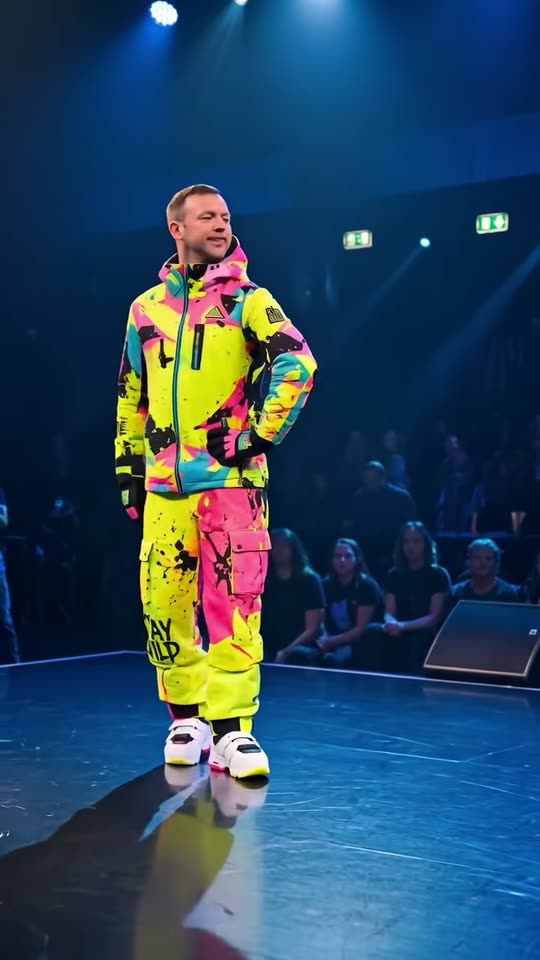
Gang Gang Dance AI: Dance the Viral Jean Phil Battle From a Single Photo
Deep crouch, sweeping arms, gazing up at the lights, finishing with hand on hip and chin. Upload a photo to perform on the battle stage or your location, sound included.
The gang gang dance became the viral AI battle of fall 2026: a confident, slow hip-hop freestyle from an actual battle that AI brought to Jean Phil, then everyone else. Upload a full-body photo. Perform under blue battle lights or in your setting, with sound attached.
Also called Gang gang dance battle · Gang gang gang dance · Jean Phil dance · Jean Phil dance battle · Jean Philanthrope dance
Example
What your Gang Gang Dance video shows
Here's the source reel. Your photos swap in for its performer, so your video mirrors these shots with your face. Every generation is unique.
Source reel by @thespazg7, 15 s
The source reel by @thespazg7, who used AI to insert himself into the gang gang dance battle: solo under blue stage lights, from deep crouch to the hip-and-chin finish. On stage replicates this reel.
How to create the Gang Gang Dance video with Smew AI
Everything happens in your browser. No editing software, no prompt writing, no watermark.
Upload your photo
Click "Create your own" and upload yourself, full body. Snap with camera or select from library.
Click Generate
The button displays the cost. Seedance 2.5 inserts your photos into the Gang Gang trend, replicating it frame by frame for 15 seconds with the original audio. No prompt needed.
Download or post
Your video arrives in several minutes as 9:16 MP4. Download it, post from your device, or retrieve it later from your Library.
What photo works best?
You upload one photo for either version.
Full body, standing. The dance involves crouches, leans and footwork, so a complete body shot produces the best legs and footwear. With a waist-up shot, the AI must infer the rest.
On stage: you perform under the blue battle lights in your photo's clothing. Keep your face clear and facing forward.
Your place: you perform in your photo's setting, so choose a photo with space around you, like outdoors, a hallway or a room.
Clear lighting, no sunglasses, no hat covering your face, and no other people visible.
Upload your own photo or one of a consenting adult. Never a public figure or stranger.
Where the Gang Gang Dance trend began
The choreography originates from a hip-hop battle. Belgian freestyle dancer Doyah (@doyahtreize) performs a deliberate, self-assured routine to West Coast rap featuring a "gang gang" refrain: deep crouch with extended arms, swings and tilts, a prolonged gaze upward at lights, and closing with hand on hip and chin. Reposts like @equente.oficial's from 2 September 2026 with 1.3 million views spread it across TikTok.
On 23 September @unsvng shared an AI rendition featuring a Jean Phil-style character, the bobbed AI Frenchman popular that month, performing the routine on a battle stage, crediting Doyah in text. By 14 October it reached 43.8 million views and 3.9 million likes, top comments noted the AI deception, and its audio appeared in 374 videos.
CapCut templates emerged days later. On 27 September @thespazg7 used AI to insert his face into the battle and launched the #ganggangdancebattle tag, which this page replicates.
@equente.oficial shares battle footage of Belgian hip-hop dancer Doyah performing to the "gang gang" track; by 14 October it reaches 1.3 million views and 77,300 likes. TikTok
@unsvng shares the AI rendition featuring a Jean Phil-style character on the battle stage, crediting Doyah; by 14 October it reaches 43.8 million views, 3.9 million likes and 798,200 shares, with its audio in 374 videos. TikTok
CapCut template posts let users insert themselves or others into the Jean Phil gang gang dance; one reaches 161,900 views by 14 October. TikTok
@thespazg7 uses AI to insert his face into the gang gang dance battle and launches the #ganggangdancebattle tag; by 14 October the clip reaches 55,000 views. Both versions here replicate it. TikTok
US Google searches for "gang gang dance" begin and maintain 6 to 10 on the Google Trends scale through 14 October, compared to 1 to 3 for "toc toc dance". Google Trends
Copy and paste
Gang Gang Dance prompts used
You don't need these: the single-tap flow executes them automatically, along with the trend clip. [Image 1] and [Image 2] are your photos, and [Video 1] is the trend clip being replicated.
On stage
1 photo: you, head to toesSeedance 2.515 s · 720p · 9:16228 credits
Video prompt
Recreate the reference video [Video 1] shot for shot. The ONLY change: the man in the neon yellow and pink ski suit who dances alone on the stage is now the person in [Image 1].
Use [Image 1] as the only identity reference for the main performer. Preserve the subject's recognizable face, skin tone, hairstyle, body proportions, clothing characteristics, and overall identity consistently throughout the video. Copy the exact face from [Image 1] - face shape, eye color and eye shape, eyebrows, nose, mouth, skin tone, age, hair color, hair length and hairstyle, and any beard, moustache, glasses or freckles exactly as in the photo, so their friends instantly recognize them. Never drift back to the original dancer's face. NO neon ski suit, no ski gloves and no chunky white boots unless [Image 1] shows them: the dancer wears the clothes from [Image 1].
Use the reference video [Video 1] as the only reference for the scene, camera position, framing, body movement, gesture sequence, performance rhythm, spatial blocking, and timing. Do not copy the original performer's identity; transfer only the reference video's scene, pose, motion, choreography, interaction, framing, and timing.
Create an approximately 15-second cinematic stage-performance video. Reproduce the same dark indoor theater environment with a glossy black stage floor, deep black background, subtle blue stage lighting, surrounding seated audience, and the same intimate live-performance atmosphere. Keep the main performer centered in the foreground.
Maintain a mostly fixed audience-level wide camera. Do not add new locations, extra cuts, dramatic camera moves, dolly-ins, orbit shots, or unrelated close-ups.
Strictly follow the reference performer's motion and timing. Begin with a slightly forward-leaning posture, bent knees, and both arms reaching downward and forward. Continue with alternating arm extensions, wrist and hand movements, small steps, subtle weight shifts, shoulder movement, and gradual transitions between crouched and upright posture.
As the performance develops, the protagonist straightens, lowers the arms, briefly pauses, then lifts the head and looks upward. In the second half, increase movement intensity according to the reference: side-to-side weight shifts, torso leans, arm swings, crossed-arm gestures, outward arm extensions, upper-body twists, and more expressive head and torso movement.
Near the ending, reproduce the faster head and upper-body motion, followed by the final confident pose with one arm raised and the other near the waist or hip. Preserve the same progression from restrained movement to more expressive theatrical performance.
All motion must remain physically believable, with realistic balance, floor contact, joint movement, hand anatomy, torso rotation, and weight transfer. Do not invent new choreography or random dance moves.
Maintain strict identity consistency. No face drift, identity blending, duplicated protagonist, random costume changes, malformed hands, extra limbs, floating feet, incorrect floor contact, changing stage environment, unnecessary subtitles, logos, watermarks, or unrelated effects. The final result should feel like the person from [Image 1] performed the same routine in the same theater, with the same scene, movements, pauses, rhythm, and framing as the reference video. The people in the audience keep their own faces and never get the dancer's face.
1 photo: you, head to toesKling 3.0 Motion Control15 s · 720p · 9:1660 credits
Video prompt
One continuous single take, fixed camera, vertical video. Recreate the reference video exactly, but the dancer is the person from the reference image instead of the man: the same person with the same face, hair, skin tone, body and clothes, in the place from the reference image.
Use the reference image as the only identity reference for the main performer. Preserve the subject's recognizable face, skin tone, hairstyle, body proportions, clothing characteristics, and overall identity consistently throughout the video.
Strictly follow the reference performer's motion and timing. Begin with a slightly forward-leaning posture, bent knees, and both arms reaching downward and forward. Continue with alternating arm extensions, wrist and hand movements, small steps, subtle weight shifts, shoulder movement, and gradual transitions between crouched and upright posture.
As the performance develops, the protagonist straightens, lowers the arms, briefly pauses, then lifts the head and looks upward. In the second half, increase movement intensity according to the reference: side-to-side weight shifts, torso leans, arm swings, crossed-arm gestures, outward arm extensions, upper-body twists, and more expressive head and torso movement.
Near the ending, reproduce the faster head and upper-body motion, followed by the final confident pose with one arm raised and the other near the waist or hip. Preserve the same progression from restrained movement to more expressive theatrical performance.
All motion must remain physically believable, with realistic balance, floor contact, joint movement, hand anatomy, torso rotation, and weight transfer. Do not invent new choreography or random dance moves.
No neon yellow and pink ski suit, no ski gloves and no chunky white boots unless the reference image shows them. No cuts, no text, no captions or logos on screen. Exactly one person, no extra people.
You pay per video in credits, with the exact cost displayed on the Generate button before any charge. The single-tap price includes the complete video, created in one step from your photos and the trend clip, billed once. Each version has separate pricing: On stage 228 credits, Your place 60 credits. Lower-cost models are available if you execute the prompts manually in AI Video.
Video model
Settings
Credits
On stage: Seedance 2.5 (this template)
15 s, 720p, replicates the trend clip, single tap
228
Your place: Kling 3.0 Motion Control (this template)
15 s, 720p, replicates the choreography of the trend clip, single tap
60
One-time packs and plans are on the pricing page. A failed video gives its credits back.
What are the gang gang dance moves, broken down by seconds?
Both versions perform the choreography from the AI battle clip shown here, one continuous 15-second shot:
Time
Movement
0 to 0.5 s
Deep crouch, leaning forward, knees bent, arms extending down and forward.
0.5 to 2 s
Wide arm sweep outward, followed by a deep lean with arm swinging back.
2 to 7.5 s
Rising upright, arms lowered, with small steps and weight transfers, a pause, then a prolonged gaze upward at lights.
7.5 to 10 s
Head tilts back, arms cross, torso rotates and one arm lifts.
10 to 12 s
Forward lean with extended arms, and a kick.
12 to 15 s
One finger points upward, then one hand to hip and other to chin, with a confident look toward the audience.
The expression remains calm and self-assured throughout: the performance emphasizes attitude over speed.
Exact pricing for each version appears on the Generate button before any charge. Your place has the lowest cost. Each generation is a unique take, so outputs vary.
On stage or Your place: which gang gang dance version to choose?
Click "Create your own" and select a version, or click the button beneath the reel on this page for On stage.
On stage
Your place
Photos
1, you
1, you
How it works
Seedance 2.5 inserts you into the AI battle clip shown, replacing its performer
Kling 3.0 Motion Control extracts only the choreography from that clip and applies it to you
Where you dance
The dim battle stage under blue lighting, with audience seated behind you
Your photo's setting
Clothes
From your photo
From your photo
Length
15 s
About 15 s
Sound
The clip's audio, restored after generation; you can disable it
The same
On stage is the recognized trend format: the polished stage, blue lighting and watching audience. Your place is more affordable and suits a photo from your street, workplace or home.
Want the other Jean Phil dance? The Toc Toc dance features hops and door knocks, with Human, Duo and Pet versions.
Will it give me the Jean Phil appearance? No. Your face, hair and outfit come from your photo. The bob haircut, mustache and vintage suit are the character creator's property, and Smew AI doesn't apply them to you. The clip dancer's neon ski suit is also excluded, unless you're wearing one in your photo.
Common issues and solutions
Problem
Solution
Neon ski suit, ski gloves or chunky white boots appear (On stage)
The clip's dancer wears these. The prompt excludes them unless in your photo; regenerate.
Face resembles the clip's dancer more than you (On stage)
Upload a sharp, well-lit photo with your face toward camera, then regenerate.
Legs appear stiff or feet slide (Your place)
Upload a full-body standing photo. With waist-up shots, the AI must create your legs.
Setting appears cramped or strange (Your place)
Motion Control preserves your photo's setting. Photos with surrounding space work best.
Hand blurs during arm swing
Common in rapid movements. A second generation produces different results.
Model rejects a photo
Some photos get rejected. Credits are refunded; try a different photo.
What sound, caption and hashtags suit the gang gang dance?
Your clip includes the audio from the source clip: the rap track with the "gang gang" refrain that defines the trend, restored after generation and ready to post. You can disable it on the result screen and choose audio when posting instead. The track is owned by its rights holders, and Smew AI grants you no license to it. Music policies vary by platform, so review them before using the clip in ads or sponsored posts.
Caption suggestions: "Entered the battle", "Who won?", "When the beat hits", "Gang gang". Or create your own.
Hashtags: as of 14 October 2026, #jeanphildance had 2,125 TikTok videos and 16.6 million views, and #jeanphil 5,113 videos and 195.8 million views. #ganggangdance (1,823 videos, 26.9 million views) predates this and includes other dances, while #ganggangdancebattle is the new tag for this version. Maintain the platform's AI disclosure.
It's a viral dance from September 2026: a deliberate, confident hip-hop freestyle featuring a deep crouch, arm sweeps, an upward gaze at lights, leans, and ending with hand on hip and chin, set to rap with a "gang gang" refrain. The AI clip that popularized it had 43.8 million TikTok views by 14 October 2026.
Who created the gang gang dance?+
The choreography comes from a battle freestyle by Belgian hip-hop dancer Doyah (@doyahtreize). On 23 September 2026 @unsvng posted an AI rendition featuring a Jean Phil-style character in his place and credited him, and that clip launched the trend.
Is the gang gang dance a Jean Phil dance?+
Many posts call it that, because the viral AI clip featured a Jean Phil-style character on the battle stage. Jean Phil, or Jean Philanthrope, is the bobbed French character that went viral in September 2026 and is widely believed to be AI-generated. He's also featured in the [Toc Toc dance](/templates/toc-toc-dance-ai-trend), a separate dance with hops and door knocks.
Is the viral gang gang dance clip authentic?+
No. The clip with 43.8 million views is AI-generated, and top comments mention it deceived viewers until they read comments. The authentic freestyle is Doyah's, from a dance battle.
How do I create the gang gang dance AI video with my photo?+
Click "Create your own", select On stage or Your place, and upload one full-body photo of yourself. Click Generate; the button displays the cost first. You receive a clip of approximately 15 seconds with audio. No prompt writing needed, and the video appears in your Library when ready.
What distinguishes On stage from Your place?+
On stage inserts you into the AI battle clip using Seedance 2.5: the dim stage, blue lighting and seated audience remain, with you replacing the dancer in your clothing. Your place uses Kling 3.0 Motion Control: it extracts only the choreography and applies it to you in your photo's setting, at lower cost.
Will the video apply the Jean Phil look or ski suit?+
No. You retain your face, hair and clothing from your photo. The Jean Phil appearance is the character creator's property, so Smew AI doesn't apply it, and the prompt excludes the clip dancer's neon ski suit. If you want a specific look, wear it in your photo.
What prompt does the gang gang dance AI employ?+
No trend creator published a prompt, and CapCut templates are proprietary. On stage uses a published Gang Gang Dance prompt for photo plus battle clip on Seedance, with modified photo descriptions, an added second-dancer line and two removed lines, plus added ski suit exclusions. Your place uses its choreography lines in our Motion Control framework. You write no prompt.
Can my pet do the gang gang dance?+
Not currently. A pet version requires an AI clip of a pet performing this dance to replicate, which doesn't exist yet. Your pet can do the [Toc Toc dance](/templates/toc-toc-dance-ai-trend) or the [Tecktonik dance](/templates/tecktonik-dance-ai-trend) instead.
What audio does my video include?+
The audio from the source clip, the rap track with the "gang gang" refrain, restored after generation. You can disable it on the result screen. The track is owned by its rights holders, and Smew AI grants you no license to it.
What's the video length and format?+
Both versions produce approximately 15 seconds. On stage is vertical 9:16. Your place matches your photo's aspect ratio, so vertical photos yield vertical clips. Both are MP4 files at 720p with audio and no watermark, ready for TikTok, Reels or Shorts.
Is the dance in the video real?+
No. The dance is AI-generated from one still photo, and you never performed these movements. Use only your photo or one from a consenting adult, and maintain the AI disclosure when posting.
Is there a gang gang dance tutorial?+
The second-by-second breakdown above serves as one. To learn gang gang dance choreography yourself, crouch low with extended arms, swing and lean, gaze up at lights, then place hand on hip and chin. Or skip practicing: upload one photo and let AI dance it for your TikTok.
How do I participate in the gang gang dance challenge?+
Create your gang gang AI dance here and post it: TikTok, Reels and Shorts all accept the clip with audio. The gang gang dance trend appears under #ganggangdancebattle and #jeanphildance; maintain the AI disclosure.
Do I need a gang gang dance template or CapCut template?+
No. CapCut templates for the dance exist, but here you upload one photo and click Generate, receiving a gang gang dance video with the prompt pre-written.